


Ghosting in Freelancing: Proven Ways to Handle Client Silence
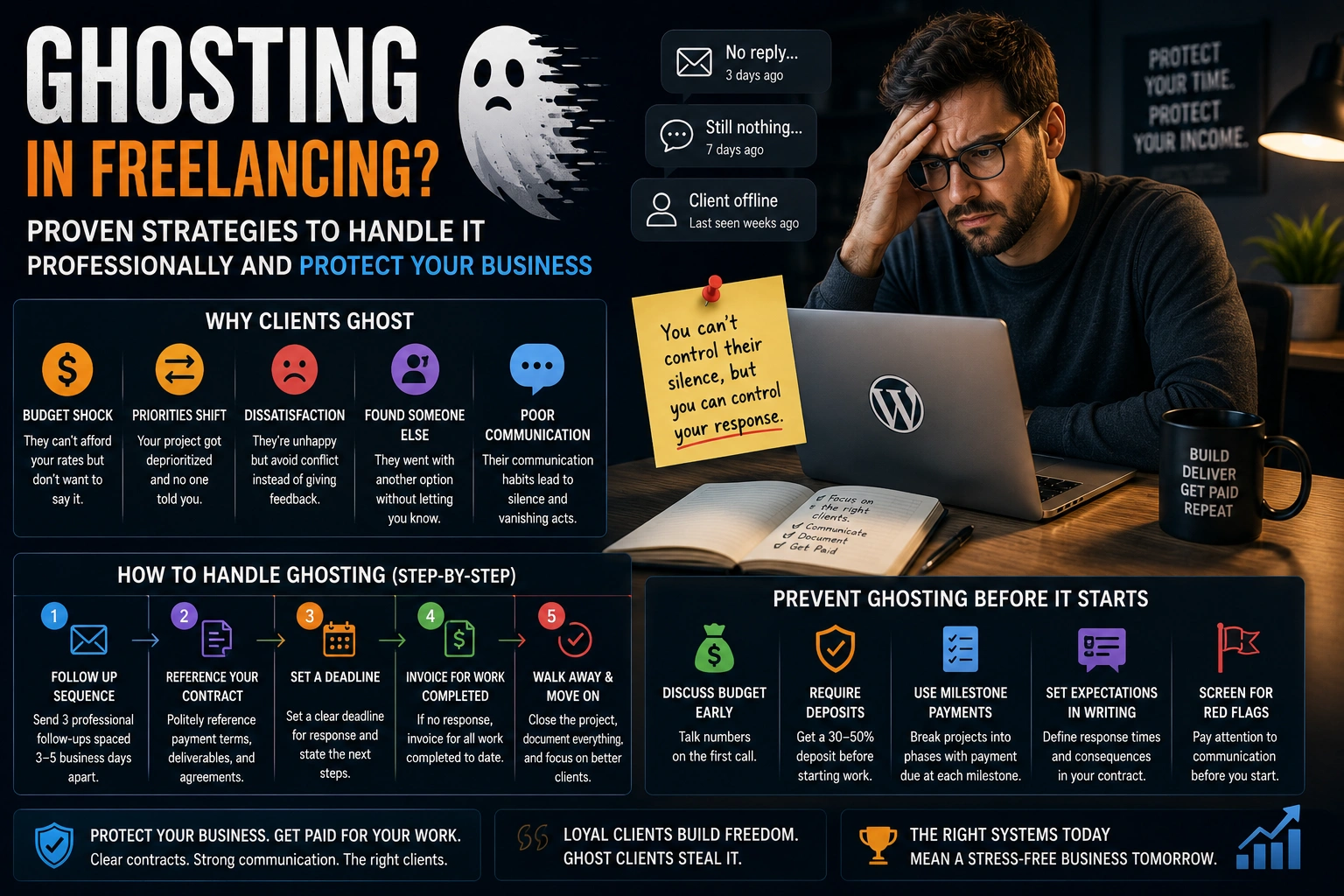
Table of Contents
Nothing stings quite like pouring weeks of work into a client project only to have them vanish without a trace. No reply to your emails, no feedback on the latest deliverable, no explanation — just silence. Ghosting in freelancing is one of the most frustrating and demoralizing experiences you can face as an independent professional, and if you have been doing this long enough, you know exactly how painful it feels. I have dealt with it more times than I care to admit, and every single time it forced me to rethink how I run my business.
The good news? You do not have to let client silence derail your income or your confidence. Here are proven, actionable strategies for handling ghosting with professionalism — and preventing it from happening in the first place.
Why Ghosting in Freelancing Is More Common Than You Think
If you think getting ghosted by a client is rare, the data tells a different story. According to a 2025 Flexable report on freelancer payment issues, 58% of freelancers globally encounter non-payment or delayed payments, with small businesses accounting for 70% of those cases. And behind many of those unpaid invoices is a client who simply went silent.
Ghosting in freelancing takes several forms. Sometimes a prospect disappears after receiving your proposal. Other times a client goes quiet mid-project, leaving you with half-finished work and no direction. The worst cases involve clients vanishing after you have delivered the final product — taking your work without paying for it. Each scenario requires a different response, but they all share a common root: a breakdown in communication and accountability.
The freelance economy has grown to an estimated 1.57 billion workers globally, and the sheer volume of client-freelancer relationships means ghosting has become almost normalized. But normalized does not mean acceptable, and it certainly does not mean you are powerless to address it.
The Real Reasons Clients Ghost Freelancers
Understanding why clients ghost is the first step toward handling it effectively. In my experience, it almost always comes down to one of these scenarios.
Budget shock. The client realized they cannot afford your rates but feels too awkward to say so. Instead of negotiating or declining, they simply disappear. This is especially common when pricing discussions happen too late in the sales process.
Internal priorities shifted. Your project got deprioritized internally, and nobody bothered to tell you. The decision-maker moved on to something else, and your emails are sitting unread in a forgotten inbox.
Dissatisfaction they will not voice. Some clients are conflict-averse. Rather than giving you honest feedback about work they are unhappy with, they choose silence. As Xolo’s guide on client ghosting explains, this often stems from the client’s own communication shortcomings rather than the quality of your work.
They found someone else. The client went with another freelancer or brought the project in-house but did not have the courtesy to let you know. It is rude, but it happens frequently in competitive markets.
None of these reasons excuse the behavior, but recognizing them helps you respond strategically instead of emotionally. If you want to sharpen your instincts for spotting problematic clients before they ghost, my post on deadly freelance client red flags covers the five warning signs I screen for on every project.
Proven Strategies for Handling Ghosting in Freelancing
When a client goes silent, your response in the first few days determines whether you salvage the relationship, protect your income, or at least walk away with your dignity intact. Here is the exact framework I use.
Step 1: Send a Structured Follow-Up Sequence
Do not send a single follow-up and then wait two weeks in silence yourself. Use a structured three-touch sequence spaced 3 to 5 business days apart. The first message should be warm and assume good intent — something like “Just checking in on the project, hope everything is going well on your end.” The second should be more direct, referencing specific deliverables or decisions that need their input. The third should set a clear deadline for response.
Keep every message professional and concise. Resist the urge to write long, emotional emails. As freelance designer Matt Olpinski explains, consistent follow-up is one of the most effective tools for preventing ghosting from becoming permanent.
Step 2: Reference Your Contract and Payment Terms
If the client has gone silent after you delivered work, your contract is your strongest leverage. In your follow-up, politely reference the payment terms, deliverable acceptance clauses, and any kill fee provisions. A well-written contract transforms ghosting in freelancing from a catastrophe into a manageable business situation.
If you are working without a contract — stop doing that immediately. Every project needs one, no exceptions. My earlier post on freelancer contracts and invoices walks through the essential clauses that protect you in exactly these situations.
Step 3: Set a Clear Deadline and Consequences
In your final follow-up, set a specific date by which you need a response and clearly state what happens if you do not hear back. This might mean pausing work, invoicing for completed milestones, or closing the project entirely. The key is to be firm but professional — never threatening. Frame it as a business decision, not a personal confrontation.
A sample message: “Hi [Name], I have not heard back since [date]. I will need a response by [deadline] so I can either continue the project or close it out and invoice for the work completed to date. I hope we can move forward together, but I want to be transparent about my timeline.”
Step 4: Know When to Walk Away
If three follow-ups over two to three weeks produce nothing, it is time to accept the situation. Send a final invoice for any completed work, document everything, and move on. Chasing a ghost client beyond this point costs you more in time and mental energy than the project is worth.
I keep a simple spreadsheet tracking every instance of client ghosting — the project type, how far along we were, and what red flags I missed. Over time, this data has helped me refine my screening process and cut ghosting incidents by more than half.
How to Prevent Ghosting in Freelancing Before It Starts
The best way to handle ghosting in freelancing is to make it unlikely in the first place. These preventive measures have made the biggest difference in my own business.
Discuss budget on the first call. If a prospect will not talk numbers early, they are far more likely to ghost after seeing your proposal. Ask for a budget range during your discovery call and share your own starting rates. This single filter eliminates most budget-shock disappearances.
Require deposits before starting work. A 30-50% upfront deposit does two things: it proves the client is financially committed, and it guarantees you get paid for at least part of the work even if they vanish. I never start a project without a deposit, and I have not had a single non-payment issue since adopting this policy.
Use milestone-based payments. Break larger projects into phases with payment due at each milestone. This creates natural check-in points where communication is required and reduces your financial exposure if a client disappears mid-project.
Set communication expectations in writing. Include a clause in your contract specifying expected response times (for example, 48 business hours) and what happens if the client fails to respond within a defined period. When expectations are written down and signed, clients take them seriously.
Screen for red flags early. Pay attention to how prospects communicate before you start working together. Slow replies, vague scope descriptions, and reluctance to sign a contract are all early warning signs. Trust your instincts — if something feels off during the sales process, it will only get worse once the project begins.
Stop Letting Client Silence Destroy Your Freelance Business
Ghosting in freelancing is not just an inconvenience — it is a threat to your cash flow, your schedule, and your confidence. But it does not have to be something you suffer through passively. With the right contracts, screening processes, and follow-up systems in place, you can dramatically reduce the frequency of client ghosting and handle it professionally when it does happen.
Every ghost client I have dealt with taught me something valuable about how I run my business. The deposits I now require, the communication clauses in my contracts, the structured follow-up sequences — all of these came from lessons learned the hard way. The sooner you build these systems into your workflow, the sooner ghosting in freelancing becomes a rare annoyance instead of a recurring crisis.
Ready to build a freelance business where clients respect your time and pay on schedule? Start by tightening your contract and requiring deposits on your very next project. And if you need a WordPress developer who communicates clearly and delivers on time — let’s talk.