


Freelance Contract Clauses for Essential Legal Protection
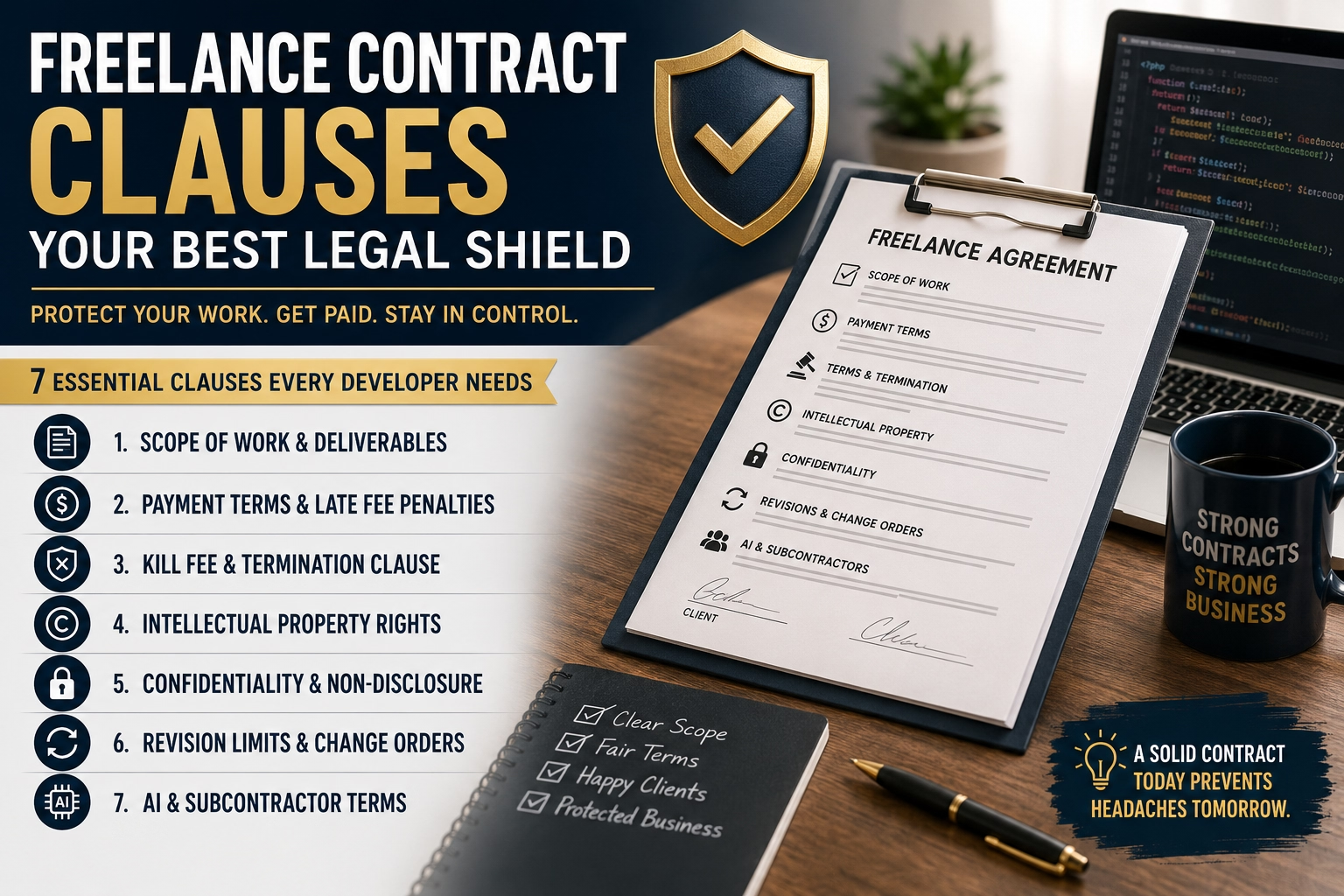
Table of Contents
Why Freelance Contract Clauses Are Your Best Legal Shield
Here’s a stat that should keep you up at night: 29% of all freelance invoices are paid late, and the global average payment time sits at 39 days from invoice submission. Even more alarming, 85% of freelancers report being paid late at least some of the time. If you’re operating without airtight freelance contract clauses, you’re essentially hoping clients will do the right thing — and hope is not a business strategy.
I learned this the hard way early in my career when a client canceled a project midway through, ghosted on the remaining balance, and left me scrambling. The problem wasn’t the client — it was my contract. It lacked the specific clauses that would have protected me legally and financially. Since then, I’ve built a contract system that has eliminated payment disputes and kept scope creep in check.
Strong freelance contract clauses do more than just look professional. They create enforceable legal obligations, set boundaries both parties understand, and give you real leverage when things go sideways. In states like New York and California, written contracts are now legally required for freelance projects above certain thresholds — so this isn’t just smart business, it’s increasingly the law.
7 Essential Freelance Contract Clauses Every Developer Needs
You don’t need a 20-page legal document. What you need are the right clauses covering the right risks. Here are the seven freelance contract clauses I include in every single project agreement.
1. Scope of Work and Deliverables
This is the foundation everything else rests on. Define exactly what you’re delivering — pages, features, functionality, file formats — and explicitly state what’s not included. Instead of “build a website,” write “design and develop a 5-page WordPress site including Home, About, Services, Blog, and Contact pages with responsive design and contact form integration.”
Vague scope is the leading cause of scope creep. The more specific your deliverables list, the harder it is for anyone to claim “I thought that was included.” If you’ve already read my guide on freelancer contracts and invoices, you know this section alone can save you thousands.
2. Payment Terms and Late Fee Penalties
Spell out the total cost, payment schedule, accepted methods, and what happens when a payment is late. I structure most projects as 30% upfront, 30% at midpoint, and 40% on completion. The upfront deposit filters out unserious clients and protects your cash flow.
Include a clear late fee — I charge 1.5% monthly interest on overdue balances. And specify payment windows: Net 15 is my preference for smaller clients, Net 30 for established companies. Clients who pay late can face significant penalties under laws like New York’s Freelance Isn’t Free Act, where courts can award double damages on unpaid invoices.
3. Kill Fee and Termination Clause
What happens if the client pulls the plug halfway through? Without a kill fee clause, you eat the loss. A kill fee guarantees you get compensated for work completed plus a percentage of the remaining contract value. Standard kill fees range from 25% to 50%, often scaled to project progress — 25% if canceled early, 50% at the midpoint, 75% if you’re nearly done.
Include clear termination procedures: either party can terminate with 7–14 days written notice, with the client paying for all completed work plus the kill fee. Make your upfront deposit non-refundable — this doubles as your baseline cancellation protection.
4. Intellectual Property and Ownership Rights
Your contract must specify who owns the final deliverables and when ownership transfers. My standard approach: I retain all intellectual property rights until full and final payment is received. Once paid in full, ownership transfers to the client. This prevents anyone from using your work without paying for it.
Also address portfolio rights — include permission to showcase the work in your portfolio and case studies. Most clients have no issue with this, but getting it in writing avoids awkward conversations later.
5. Confidentiality and Non-Disclosure
Clients trust you with sensitive business information — login credentials, financial data, proprietary strategies. A confidentiality clause protects both parties by establishing clear obligations around sensitive information. For high-stakes projects, consider a separate NDA, but for most freelance work a solid confidentiality paragraph in your main contract is sufficient.
6. Revision Limits and Change Orders
Unlimited revisions is a trap. Specify exactly how many revision rounds are included (two is my standard) and what counts as a “revision” versus a “new request.” Anything beyond the included rounds gets billed at your hourly rate through a formal change order process.
The change order workflow should be clear: client submits a written request, you provide a cost and timeline estimate, and work begins only after approval. This kills the “just one more tweak” cycle that destroys profitability. As SitePoint’s contract guide notes, a warranty clause with specific limits on included support is equally critical for post-launch protection.
7. AI and Subcontractor Terms
This is the clause most freelancers skip in 2026, and it’s becoming essential. If you use AI tools in your workflow — for code generation, design assistance, or content drafting — your contract should specify whether AI-assisted work is permitted and who owns AI-generated outputs. Similarly, if you plan to subcontract any portion of the work, disclose that upfront and define the boundaries.
Being transparent about your process builds trust and prevents disputes. Clients increasingly ask about AI usage, and having it addressed in your freelance contract clauses shows you’re ahead of the curve.
How to Negotiate Freelance Contract Clauses Without Losing the Client
Many freelancers fear that presenting a contract will scare clients away. The opposite is true — professional clients expect contracts, and the ones who resist them are often the ones who cause problems.
Present your contract as a standard part of your process, not a negotiation tactic. Frame it positively: “I include a kill fee in all my contracts — it protects both of us by creating a clear, fair process if the project scope changes.” When the clause is already in your template, clients accept it far more readily than if you redline it into their agreement.
If a client pushes back on specific clauses, listen to their concerns and find a middle ground. Maybe they want Net 30 instead of Net 15 — that’s often acceptable. But never compromise on the fundamentals: scope definition, upfront deposit, and kill fee. Those are non-negotiable protections that keep your business solvent.
Common Freelance Contract Mistakes to Avoid
Even experienced freelancers make contract errors that cost them. Here are the most damaging ones I see regularly.
Using a generic template without customization. Every project is different. Your scope, timeline, and payment structure should reflect the specific engagement — not a copy-paste from your last contract.
Skipping the contract for “small” projects. Some of the worst payment disputes I’ve seen were on projects under $2,000. The size of the project doesn’t determine the size of the headache. Use your contract every time, no exceptions.
Forgetting post-launch boundaries. Without a “project complete” clause, clients will send you “quick fix” requests for months after delivery. Define what happens after final approval — any future work requires a new agreement.
Not getting both signatures before starting work. A contract only protects you if it’s signed. Never begin work on a verbal agreement or an unsigned document, no matter how urgent the client says the timeline is.
Protect Your Freelance Business Starting Today
Building bulletproof freelance contract clauses into your workflow is the single highest-ROI activity you can do for your business. It takes a few hours to set up a solid template, but it saves you from thousands in lost revenue and countless hours of frustration over the life of your career.
Here’s your action plan: review your current contract against the seven clauses above, fill in any gaps, and commit to using it for every project starting now. If you need a deeper dive into the invoicing side of things, check out my complete guide to freelancer contracts and invoices.
Ready to level up your freelance business? Get in touch — I help developers and business owners build professional systems that attract better clients and protect their income.