


Green Web Hosting in 2026: The Essential Sustainability Guide
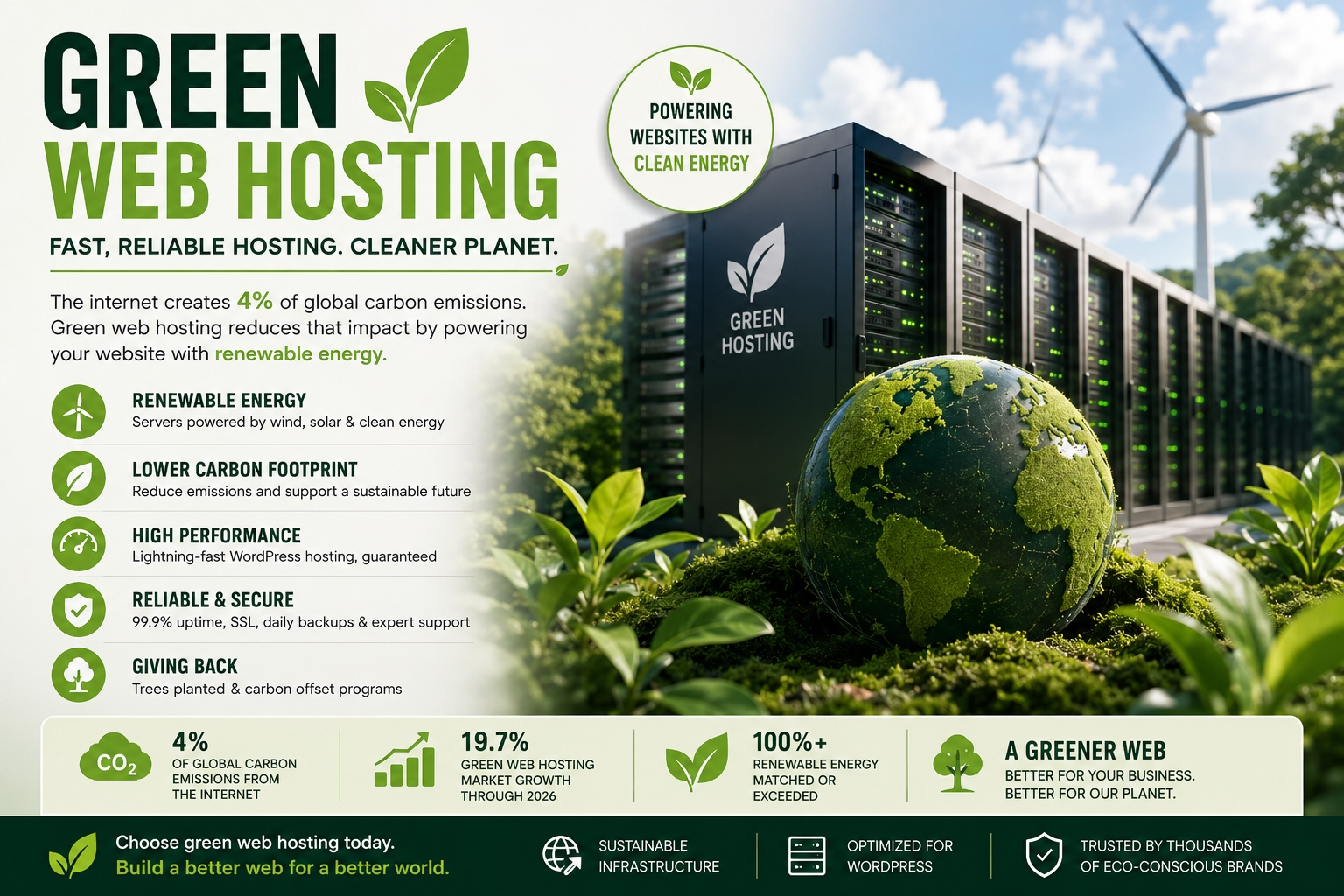
The internet is responsible for roughly 4% of global carbon emissions — more than the entire airline industry. As a WordPress developer, I think about this often: every site I build runs on servers that consume electricity around the clock. That’s why green web hosting isn’t just a feel-good marketing phrase anymore — it’s an essential choice for any business that cares about its environmental footprint and brand reputation in 2026.
In this guide, I’ll break down exactly what green web hosting means, why it matters now more than ever, and how to choose a sustainable hosting provider that still delivers stunning performance for your WordPress site.
Table of Contents
What Is Green Web Hosting?
Green web hosting refers to web hosting services that actively reduce or offset the carbon emissions produced by their data centers and server operations. Traditional hosting providers rely heavily on fossil-fuel-powered electricity to run and cool massive server farms. Green web hosting providers take a different approach by powering operations with renewable energy, purchasing Renewable Energy Credits (RECs), investing in carbon offset programs, or designing energy-efficient infrastructure from the ground up.
Some providers go further than carbon-neutral — they’re carbon-negative. GreenGeeks, for example, purchases three units of wind energy for every unit their servers consume. Others partner with reforestation programs, planting trees for every new account. The specifics vary, but the core principle is the same: green web hosting minimizes the environmental damage of keeping your website online.
Why Green Web Hosting Matters More Than Ever in 2026
The numbers are staggering. According to the International Energy Agency, global data center electricity demand is projected to reach between 650 and 1,050 TWh in 2026 — potentially accounting for 4.5% of worldwide electricity consumption. That’s more energy than Canada uses in an entire year. In the United States alone, data centers now account for over 4% of national electricity use, a figure expected to rise to 6% as AI adoption accelerates.
The carbon-smart web hosting market reflects this growing awareness. The industry grew from $7.52 billion in 2025 to a projected $9 billion in 2026 — a 19.7% compound annual growth rate — with expectations to reach $18.27 billion by 2030. Businesses and consumers are increasingly choosing providers that align with their sustainability values.
For small business owners, choosing green web hosting sends a clear signal to your customers. It’s a tangible sustainability commitment that sets you apart from competitors and strengthens brand trust — all without sacrificing the speed and reliability your WordPress site needs.
What to Look For in a Green Web Hosting Provider
Not all “green” claims are equal. When evaluating a green web hosting provider, look for these key indicators:
Renewable Energy Credits (RECs) or direct renewable energy use. The best providers either run their data centers on renewable energy directly or purchase RECs to offset 100% or more of their electricity consumption. Ask whether the provider matches energy at 100%, 130%, or even 300% — the higher the offset, the greater the environmental benefit.
Energy-efficient hardware. Modern NVMe SSDs consume significantly less power than traditional hard drives while delivering faster read/write speeds. Providers using current-generation hardware are inherently more efficient — and your site benefits from better performance too.
Verified certifications and transparency. Look for providers listed in the Green Web Foundation directory, which tracks hosting companies that run on green energy. Transparency about energy sourcing and carbon reporting is a strong trust signal.
Carbon offset programs. Tree-planting initiatives, partnerships with environmental nonprofits, and verified carbon offset purchases all demonstrate a provider’s commitment beyond just marketing. GreenGeeks plants a tree for every hosting account created — a small but meaningful step.
Top Green Web Hosting Providers for WordPress Sites
Several providers stand out for combining genuine sustainability efforts with the performance WordPress demands. Here are the ones I recommend:
GreenGeeks is widely considered the leader in green web hosting. They offset 300% of their energy consumption through wind energy credits and use LiteSpeed servers for fast WordPress performance. Their plans include free SSL, built-in caching, and a free CDN — solid features for any small business site.
If you’re looking for managed WordPress hosting with strong sustainability commitments, SiteGround runs on Google Cloud Platform infrastructure, which is matched with 100% renewable energy. SiteGround also uses energy-efficient hardware and has invested in reducing the environmental impact of their global data centers. Their performance is excellent — I’ve used them for client projects and consistently see sub-2-second load times.
Kinsta also deserves mention. Built entirely on Google Cloud Platform, Kinsta benefits from Google’s commitment to carbon neutrality and their goal of running on 24/7 carbon-free energy by 2030. Kinsta’s managed WordPress environment includes automatic backups, staging environments, and a global CDN — premium features that make it a strong choice for performance-focused green web hosting.
How to Measure Your Website’s Carbon Footprint
Curious how much carbon your site currently produces? The Website Carbon Calculator estimates CO2 emissions per page view based on your site’s data transfer, energy source, and hosting infrastructure. The global average web page produces approximately 0.36 grams of CO2 per page view — which adds up to 43 kg of CO2 per year for a site with 10,000 monthly page views.
The Green Web Foundation also maintains a free tool that checks whether your hosting provider runs on green energy. Simply enter your domain at thegreenwebfoundation.org to find out. If your current host isn’t green, that’s a clear data point for why switching to green web hosting should be on your roadmap.
Beyond choosing a sustainable host, you can reduce your site’s carbon footprint through performance optimization. A faster, leaner site transfers less data per visit, which means less energy consumed. If you haven’t optimized your WordPress performance yet, my guide on how to speed up your WordPress site covers every technique I use to get load times under two seconds.
Making the Switch to Green Web Hosting
If you’re convinced it’s time to move to a green web hosting provider, the migration process doesn’t have to be stressful. Most of the providers I’ve mentioned — SiteGround, Kinsta, and GreenGeeks — offer free migration services or easy-to-use migration plugins that handle the heavy lifting for you.
I’ve written a detailed walkthrough on how to migrate a WordPress site without downtime that covers the full process: backups, DNS management, database transfers, and post-migration testing. Whether you handle it yourself or hire a developer, the switch can be done in an afternoon with zero impact on your visitors.
The key is choosing a provider that balances sustainability with the features your business needs: reliable uptime, strong WordPress support, adequate storage, and the performance to keep your Core Web Vitals in the green. Green web hosting in 2026 delivers all of this — you no longer have to compromise performance for sustainability.
Your Website’s Carbon Footprint Starts With Your Host
Every website runs on energy. The question is whether that energy comes from fossil fuels or renewable sources. Switching to green web hosting is one of the simplest, most impactful sustainability decisions you can make as a business owner — and in 2026, the top eco-friendly providers deliver performance that matches or exceeds conventional alternatives.
Ready to make the switch? Get in touch — I help businesses choose the right hosting and handle the migration so you can go green without the headaches.