


Competitor Keyword Research: A Killer Guide for Incredible Startup Growth
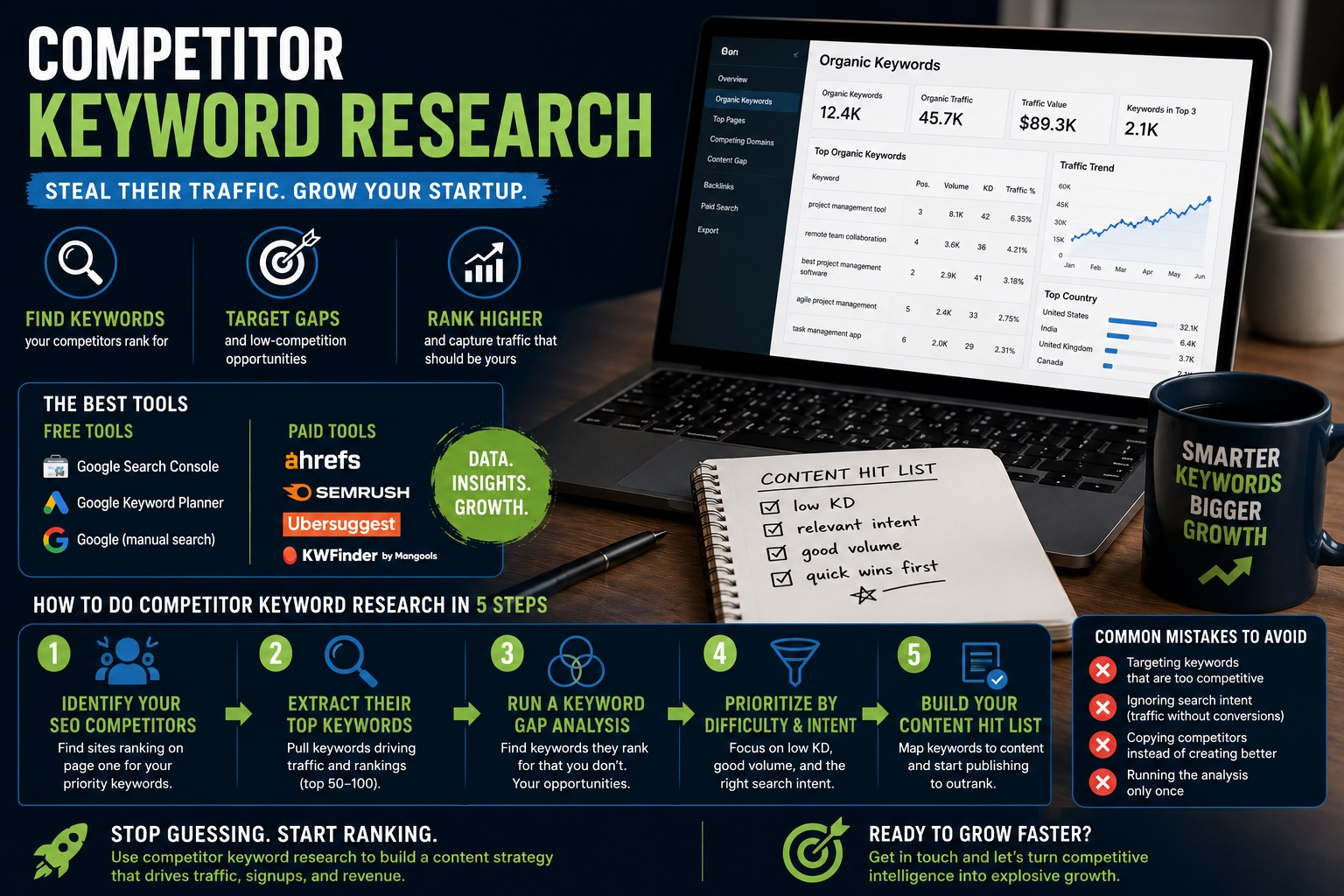
Your competitors are already ranking for the keywords that should be sending traffic to your site — and competitor keyword research is the fastest way to find out exactly which ones. If you’re a startup trying to build organic visibility without burning through your runway, this is the single most valuable SEO exercise you can do.
I use competitor keyword research as the foundation of every SEO strategy I build for clients. It strips away the guesswork and hands you a data-driven roadmap of exactly what to target, what to write, and where the real opportunities are hiding. Whether you’re pre-revenue or scaling fast, this killer guide will show you how to reverse-engineer your competitors’ organic traffic and turn it into your own.
Table of Contents
What Is Competitor Keyword Research (and Why Startups Need It)
Competitor keyword research is the process of analyzing the search terms your competitors rank for in Google, identifying the ones driving real traffic, and finding gaps where you can outperform them. Instead of starting from a blank page and guessing which keywords matter, you’re working from proven data — terms that are already generating results in your niche.
For startups, this matters even more than it does for established businesses. You don’t have months to experiment with random content strategies. Every blog post, landing page, and resource you publish needs to count. By studying what’s already working for competitors, you skip the trial-and-error phase and go straight to high-probability keyword targets.
According to SEMrush’s research, over 90% of web pages get zero organic traffic from Google. Competitor keyword research helps you avoid joining that statistic by showing you exactly which topics have proven demand and which content formats are winning in the SERPs right now.
The Best Tools for Competitor Keyword Research
You don’t need an enterprise budget to run effective competitor keyword research. Here are the tools I recommend, organized by what you can afford.
Free options that deliver real value: Google Search Console is your starting point — it shows which keywords you already rank for, giving you a baseline to compare against competitors. Google Keyword Planner (inside Google Ads) provides search volume data and related keyword suggestions at no cost. And don’t overlook Google itself: manually searching your target keywords and studying who appears on page one is one of the most underrated forms of competitive intelligence.
Paid tools worth the investment: Ahrefs and SEMrush are the gold standard for competitor keyword research. Both let you plug in any domain and instantly see their top organic keywords, estimated traffic, keyword difficulty scores, and content gaps. Ahrefs’ Content Gap tool and SEMrush’s Keyword Gap tool are specifically designed for this workflow. Most offer free trials or limited free tiers, making them accessible even on a startup budget.
For bootstrapped founders, Ubersuggest offers a solid middle ground with competitor analysis features at a lower price point. KWFinder from Mangools is another budget-friendly option that excels at finding low-competition long-tail keywords your competitors are targeting.
How to Do Competitor Keyword Research in 5 Steps
Here’s the exact process I follow when running competitor keyword research for startup clients. The whole workflow takes about 30 to 45 minutes and produces a content plan you can execute on for months.
Step 1: Identify Your Real SEO Competitors
Your SEO competitors aren’t always who you think. A SaaS startup might consider other SaaS companies their competition, but in organic search, they could be competing against review sites, industry blogs, or even Reddit threads.
Search your five most important keywords on Google and write down every domain that appears on page one. The sites that show up repeatedly across multiple searches are your true SEO competitors. Narrow it down to three to five domains worth a deep analysis. If you’re using Ahrefs or SEMrush, their “competing domains” feature automates this step — just plug in your domain and they surface sites fighting for the same keyword space.
Step 2: Extract Their Top-Ranking Keywords
For each competitor, pull their organic keyword report and focus on three things: keywords driving the most estimated traffic, keywords where they rank in positions one through ten, and keywords with clear commercial or informational intent that aligns with your business. Export the top 50 to 100 keywords per competitor into a spreadsheet for cross-referencing.
Pay special attention to long-tail keywords. A competitor ranking for “best project management tool for remote teams” is revealing a very specific audience segment you might be ignoring. These longer phrases typically have lower competition and higher conversion rates — exactly what startups need.
Step 3: Run a Keyword Gap Analysis
This is the most powerful step in the entire competitor keyword research process. A keyword gap analysis reveals every keyword your competitors rank for that you don’t — your untapped opportunities laid out in a single report.
In Ahrefs, use the Content Gap tool. In SEMrush, use the Keyword Gap tool. Plug in your domain alongside two or three competitors, and the tool surfaces all the keywords they’re capturing that you’re missing entirely. Filter by search volume (100+ monthly searches) and keyword difficulty (under 40 for realistic startup targets). Prioritize keywords where multiple competitors rank but you don’t — that’s a strong signal of proven demand in your niche. If you want a deeper walkthrough of this process, my guide on competitor SEO analysis covers the full 30-minute blueprint.
Step 4: Prioritize by Difficulty and Search Intent
Not every keyword gap is worth chasing. A keyword with 10,000 monthly searches but a difficulty score of 85 isn’t realistic for a startup with a brand-new domain. Focus on keywords that meet three criteria: a difficulty score your site can realistically compete at (typically under 30-40 for newer sites), search volume worth the effort (100+ monthly searches), and intent that matches your business goals.
Group your prioritized keywords by search intent: informational keywords become blog posts and guides, commercial keywords become comparison pages and reviews, and transactional keywords become landing pages and product pages. This alignment between keyword intent and content type is what separates startups that rank from those that waste content budgets.
Step 5: Build Your Content Hit List
Take your prioritized keywords and map each one to a specific piece of content you’ll create. For each keyword, note the target URL (new or existing page), the content format that’s winning in the SERPs (guide, listicle, comparison, etc.), and two or three related keywords to include for topical depth.
Aim for a realistic publishing cadence — two to four posts per week is aggressive but achievable for most startups. Front-load the easiest wins: low-difficulty keywords where you can rank within weeks, not months. Quick wins build momentum and start generating traffic that proves the strategy works.
Common Competitor Keyword Research Mistakes to Avoid
Targeting keywords that are too competitive. It’s tempting to chase high-volume head terms, but a startup with a domain authority of 15 won’t outrank established sites with DAs of 70+. Focus on keywords where you can realistically reach page one within three to six months.
Ignoring search intent. Ranking for a keyword means nothing if the traffic doesn’t convert. A keyword like “what is CRM” brings researchers who aren’t buying. A keyword like “best CRM for small teams” brings buyers. Always match your competitor keyword research findings to the intent behind the search.
Copying competitors instead of learning from them. The goal isn’t to replicate your competitors’ content word for word. It’s to understand what topics resonate, identify gaps they’ve missed, and create something better. If three competitors have 1,500-word guides on a topic, write a 2,500-word guide with original data, screenshots, and practical examples.
Running the analysis only once. Your competitors are publishing new content, earning new backlinks, and shifting their strategies constantly. Run your competitor keyword research at least quarterly to catch new opportunities and stay ahead of changes in the competitive landscape.
Turn Competitor Keyword Research Into Explosive Growth
The startups that win in organic search aren’t necessarily the ones with the biggest budgets — they’re the ones with the sharpest intelligence. Competitor keyword research gives you that edge by replacing guesswork with a proven, data-backed content strategy.
Start today. Pick your top three SEO competitors, run a keyword gap analysis, and build a content plan around the opportunities you find. Prioritize low-difficulty keywords with clear commercial intent, publish consistently, and revisit your competitor keyword research every quarter to stay ahead.
The gap between your startup and the competitors dominating page one isn’t as wide as you think. With the right keywords and the right content, you can close it faster than they expect.
Need help building an SEO strategy that drives real startup growth? Get in touch — I help startups and small businesses turn competitive intelligence into organic traffic that converts.