


YouTube SEO for Businesses: The Ultimate Guide to Incredible Growth
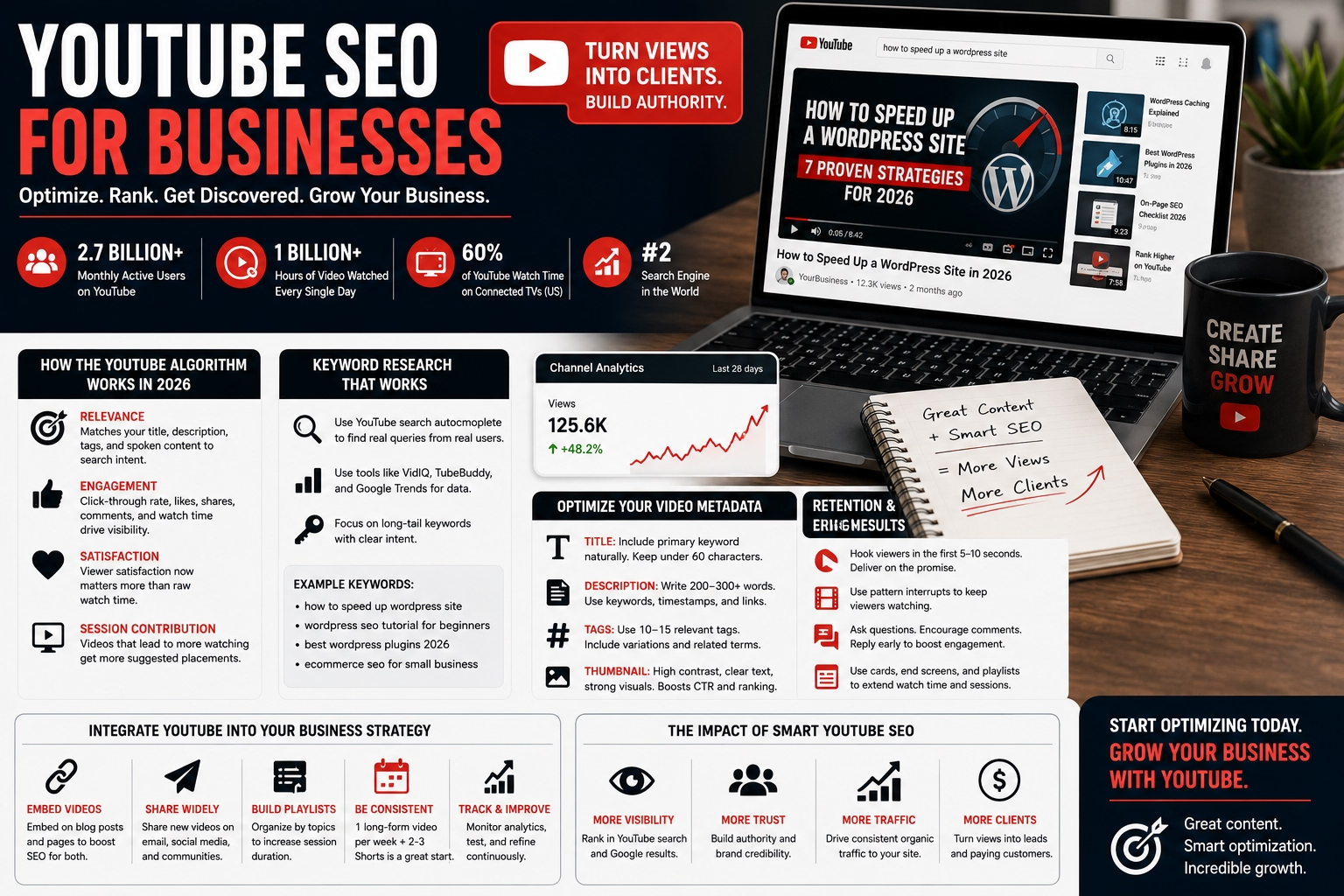
YouTube has over 2.7 billion monthly active users, and more than 1 billion hours of video are watched every single day. If your business isn’t leveraging YouTube SEO for businesses, you’re ignoring the world’s second-largest search engine — and handing visibility to your competitors. I’ve helped clients build video strategies that drive consistent organic traffic, and the playbook has shifted significantly in 2026.
This ultimate guide breaks down exactly how to optimize your YouTube presence for maximum discoverability, from keyword research and metadata to the retention signals that actually move the needle. Whether you’re publishing your first video or refining an existing channel, these strategies will help you turn YouTube into an incredible growth engine for your business.
Why YouTube SEO for Businesses Matters More Than Ever
The numbers speak for themselves. YouTube users watch over 1 billion hours of video daily, and 60% of YouTube watch time in the US now happens on connected TVs. More importantly, YouTube has become a legitimate search engine — people search for product reviews, tutorials, and solutions to problems just like they do on Google.
For small businesses, this represents an incredible opportunity. The YouTube algorithm in 2026 rewards helpful, relevant content regardless of channel size. A well-optimized video from a business with 500 subscribers can outrank a massive brand if it answers the viewer’s question better. That’s the beauty of YouTube SEO for businesses — it levels the playing field.
YouTube also directly impacts your broader search visibility. Google regularly surfaces YouTube videos in standard search results, featured snippets, and AI overviews. A strong YouTube presence strengthens your entire digital footprint, complementing the content marketing strategy you’re already building for your website.
How the YouTube Algorithm Actually Works in 2026
Understanding the algorithm is foundational to any YouTube SEO for businesses strategy. In 2026, YouTube prioritizes three core signals: relevance, engagement, and satisfaction.
Relevance is determined by how closely your video’s title, description, tags, and spoken content match a viewer’s search query. YouTube now analyzes your video’s audio to understand its content, making what you actually say in the video just as important as your written metadata.
Engagement includes click-through rate, likes, shares, comments, and watch time. But here’s the critical shift: satisfaction now outweighs raw watch time. A viewer who watches 100% of an 8-minute video and hits “like” sends a stronger signal than someone who watches 40% of a 25-minute video and bounces. Quality over quantity is the new rule.
Session contribution is the biggest algorithm change in 2026. Videos that lead viewers to watch more content afterward receive significantly more suggested placements. This means creating content that naturally flows into related topics — building playlists and using end screens strategically — directly impacts your visibility.
YouTube SEO for Businesses: Keyword Research That Actually Works
Keyword research on YouTube is different from traditional SEO, and getting it right is essential for any serious YouTube SEO for businesses strategy.
Start with YouTube’s own search bar. Type your core topic and observe the autocomplete suggestions — these are real queries from real users. If you’re a web developer, searching “WordPress” might reveal suggestions like “WordPress tutorial for beginners 2026” or “WordPress vs Wix” — each a potential video topic with proven demand.
Free tools like VidIQ and TubeBuddy provide search volume estimates, competition scores, and related keyword suggestions specific to YouTube. Google Trends is another powerful resource for comparing keyword interest over time and identifying seasonal patterns.
Focus on long-tail keywords. “How to speed up a WordPress site” is far more targetable than “WordPress tips.” Long-tail keywords have lower competition, clearer intent, and attract viewers who are actively looking for solutions — exactly the audience you want reaching your business.
Optimizing Video Metadata for Maximum Discoverability
Your metadata is how YouTube understands what your video is about and who to show it to. Getting it right is non-negotiable for effective YouTube SEO.
Titles should include your primary keyword naturally while being compelling enough to earn clicks. Keep them under 60 characters so they don’t get truncated in search results. Front-load the keyword when possible — “YouTube SEO for Businesses: 7 Proven Strategies” performs better than burying the keyword at the end.
Descriptions need at least 200 to 300 words of keyword-rich, contextual content. The first two sentences are critical — YouTube weighs this “above the fold” content more heavily, and it’s what viewers see before clicking “Show more.” Include your primary keyword, related terms, timestamps, and links to relevant resources on your website.
Tags still matter, though less than they used to. Use your primary keyword, variations, and related terms. Don’t keyword-stuff — 10 to 15 well-chosen tags are more effective than 50 loosely related ones.
Thumbnails aren’t technically metadata, but they directly impact your click-through rate, which is one of YouTube’s strongest ranking signals. Use high-contrast images with readable text, consistent branding, and expressive faces when possible. YouTube’s official optimization guide recommends focusing on thumbnails and titles as your first priority.
Retention and Engagement: The Signals That Separate Winners From the Rest
Creating content that keeps viewers watching is where YouTube SEO for businesses separates beginners from pros. Retention is now more important than raw view counts.
Hook viewers in the first 5 to 10 seconds. State clearly what they’ll learn and why it matters. Avoid long intros, brand animations, or unnecessary preamble — modern viewers have zero patience for filler.
Structure your videos with clear sections. Use pattern interrupts — visual changes, B-roll, text overlays, or shifts in pacing — to maintain interest throughout. Videos that hold consistent retention outperform longer videos that lose viewers early.
Encourage engagement actively. Ask viewers to comment with their experience or opinion on the topic. Respond to comments in the first few hours after publishing — early engagement signals activity to the algorithm and boosts visibility. End screens and cards that point to related content increase session duration, which directly improves your ranking potential.
If you’re already producing content for a social media marketing strategy, repurposing that material into YouTube videos is one of the most efficient ways to build your video library without starting from scratch.
Integrating YouTube SEO for Businesses Into Your Broader Strategy
YouTube SEO for businesses delivers the best results when it’s connected to your wider digital presence. Don’t treat your channel as a standalone project — it should feed and be fed by everything else you’re doing online.
Embed your YouTube videos on relevant blog posts and service pages. This increases both on-page engagement metrics like dwell time and reduced bounce rate, while simultaneously boosting YouTube watch time. According to YouTube’s Creator resources, connecting videos to high-value pages strengthens SEO signals for both platforms.
Share new videos immediately across your email list and social channels. Early views and engagement in the first 24 to 48 hours send strong signals to the algorithm, increasing your chances of being picked up by YouTube’s recommendation engine.
Build playlists around your core topics. Playlists keep viewers on your channel longer, boost session duration, and make your content library easy to navigate. Think of playlists as topic hubs — similar to how you organize blog categories on your website.
Finally, start with a sustainable publishing cadence. One well-optimized long-form video per week plus two to three YouTube Shorts pulled from that content is a realistic schedule that builds real momentum over time. Consistency matters far more than volume.
Start Growing Your Business With YouTube Today
YouTube SEO for businesses isn’t optional in 2026 — it’s essential. With billions of monthly users, powerful search functionality, and an algorithm that rewards helpful content regardless of channel size, YouTube is one of the highest-ROI marketing channels available to small businesses today.
Start by researching keywords your audience actually searches for, optimize every video’s metadata meticulously, create content that holds attention, and connect your channel to your broader marketing ecosystem. The businesses that commit to this now will build a searchable, discoverable content library that generates leads for years to come.
Ready to build a digital presence that works across every channel? Get in touch and let’s create a strategy that turns your expertise into incredible growth.